




Worldwide, lung cancer is one of the most common and severe malignancies. More optimal treatment results and survival rates here need an early and correct diagnosis. A lot of people don't know what tests are used to identify lung cancer, and that’s normal. But knowing these can empower your insights.
In order to rule out cancer, identify its type, and assess how far it has progressed, an organized processes make up the diagnostic procedure rather than a single test. Lung cancer treatment in Siliguri or elsewhere in India fully focuses on an individual case, offering patient-centric diagnoses and care.
This blog will talk about the diagnosis of lung cancer, from the initial symptoms to standard testing, in simple words.
Step 1: Knowing Symptoms and Risk Factors
When a person has symptoms or is in a high-risk category, lung cancer diagnosis frequently starts.
Common Lung Cancer Symptoms
Many early lung malignancies do not show noticeable symptoms, and when symptoms do manifest, they may include:
- A cough that persists or gets worse
- Pain in the chest
- Breathlessness
- Coughing up blood
- Fatigue
- Weight loss that is not explained
- Recurrent infections of the lungs, including bronchitis or pneumonia
Further diagnosis is necessary because similar symptoms might also be brought on by less serious illnesses related to the lungs or respiratory system.
Risk Factors Doctors Consider
Even without symptoms, lung specialists or doctors may evaluate lung cancer if risk factors are present, such as:
- Smoking or having smoked in the past
- Exposure to secondhand smoke
- Exposure to asbestos, radon, or industrial chemicals
- Lung cancer in the family history
- Prior chest radiation treatments
People at high risk may receive screening even before lung cancer symptoms occur.
Step 2: Reviewing Medical History and Physical Examination
Once lung cancer is suspected, your doctor does a complete evaluation.
Health History
Your doctor may ask questions about:
- History of smoking (length and intensity)
- Exposures at work
- Cancer in the family history
- Current respiratory disorders
- Current symptoms and how long they’ve lasted
This information helps the doctors choose the diagnostic tests and aids in ruling out the probability of lung cancer.
Physical Examination
Now, the doctor may undertake the following during the physical examination:
- Keep an ear out for strange sounds coming from the lungs
- Look for lymph nodes that are enlarged
- Check for indications of fluid accumulation
- Assess overall health and breathing
A physical examination in lung cancer diagnosis is very important and offers crucial hints, but it cannot identify lung cancer on its own.
Step 3: Imaging Tests
Imaging scans are vital for identifying lung problems.
Chest X-Ray
- Often, the first imaging test ordered is a chest X-ray, which may disclose:
- Lung masses
- Unusual shadows
- The fluid surrounding the lungs
On the other hand, chest X-rays may not show tiny tumors or the early stage of cancer.
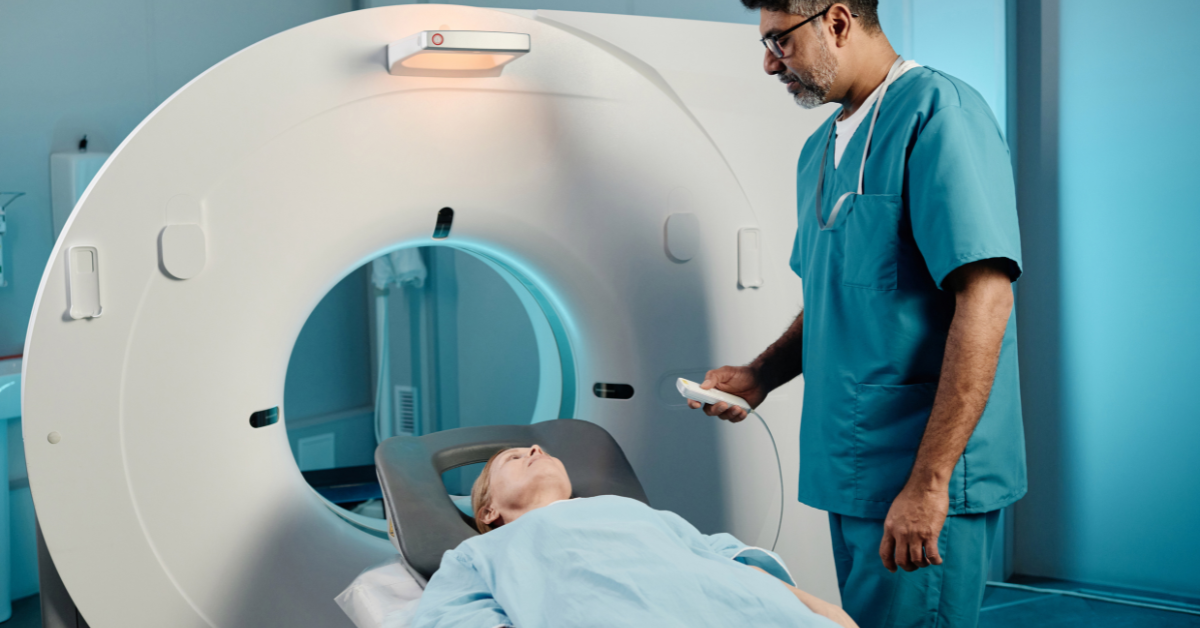
CT Scan (Computed Tomography)
Detailed cross-sectional images of the chest and lungs can be obtained with a CT scan, which helps:
- Find tiny nodules in the lungs
- Determine the size and form of tumours
- Determine which lymph nodes are swollen
CT scans are often used for screening and diagnosis since they are significantly more accurate than X-rays.
Step 4: Advanced Imaging for Further Evaluation
Further scans can be vital if initial imaging tests indicate lung cancer or a lump.
Positron Emission Tomography, or PET Scan
A PET scan reveals the body's cell activity, and on the scan, cancer cells are typically more metabolically active and appear brighter. In lung cancer diagnosis, PET scans are useful:
- Differentiate between malignant/ cancerous growths and those that are not
- Find cancer that has spread to other organs or lymph nodes
MRI Scan
If medical professionals believe cancer has progressed to the brain or spinal cord, MRI scans are of great help. These tests offer soft tissue pictures with great resolution.
Step 5: Test for Sputum Cytology
Lung specialists may check lung mucus, or sputum, if a patient has a productive cough.
How It Works:
- Over several days, the patient coughs up phlegm
- A microscope is used to examine the sample
- Pathologists seek cancer cells
Though this test is non-invasive, it works better for tumours that are close to the airways.
Step 6: Bronchoscopy & Biopsy – Confirming Lung Cancer
The most crucial stage in the diagnosis of lung cancer is a biopsy, and in order to check for cancer cells, a sample of tissue must be removed.
Bronchoscopy.A camera-equipped tiny tube is inserted into the lungs through the mouth or nose. Here, physicians are able to:
- See the airways immediately
- Collect tissue samples
- Conduct biopsies using needles
This approach works well for malignancies near the central airways.
Needle Biopsy. A tiny needle is introduced through the chest wall with CT guidance to remove tissue from lung nodules.
Thoracentesis. Doctors may drain any fluid that has gathered around the lungs and examine it for cancerous cells.
Biopsy via Surgery. Sometimes obtaining a larger tissue sample requires minimally invasive surgery.
Step 7: Laboratory and Pathology Testing
A pathologist examines a biopsy after it has been taken.
Pathology tests identify whether the cancer is:
- NSCLC, or non-small cell lung cancer
- Small cell lung cancer (SCLC)
Because lung cancer treatment approaches vary greatly, this distinction is vital to optimal recovery.
Molecular and Genetic Testing
Modern lung cancer diagnosis includes testing for genetic mutations, such as:
- EGFR
- ALK
- KRAS
- BRAF
These help lung cancer doctors choose targeted therapies and offer fully patient-centric care.
Step 8: Staging the Cancer
The extent to which lung cancer has spread throughout the body is described by staging.
How Staging Is Performed:
- Image scans
- Biopsy results
- Assessment of lymph nodes
Stages of Lung Cancer:
- Stage 0: Extremely early
- Stage I to III: Regional or localized spread
- Stage IV: Advanced or metastatic
Accurate staging has been essential. This is for planning the most effective lung cancer treatment in Siliguri or anywhere.
Compared to advanced lung cancer, early-stage lung cancer is much more treatable. When found early:
- Surgery might be a cure
- Treatment alternatives are less aggressive
- There is a notable increase in survival rates
Screening high-risk persons regularly can save lives.
A lung cancer diagnosis often needs a team of doctors, including:
- Pulmonologists (lung specialists)
- Oncologists
- Radiologists
- Pathologists
- Surgeons
They examine every test result collectively and verify:
- The presence of lung cancer
- Type and stage of cancer
- The most effective method of treatment
After a confirmed diagnosis, a treatment plan is now given to the patient. At the same time, cancer specialists consider the general health of the patient so that the treatment works in the best possible way.
Final Words
Clinical evaluation, imaging, biopsies, and laboratory testing are all vital parts of diagnosing lung cancer. Every stage is important to guaranteeing a precise detection and effective treatment strategy. You might consult here the top oncologists in Siliguri at Hope & Heal, or in your location, for promising recovery and management care.